News

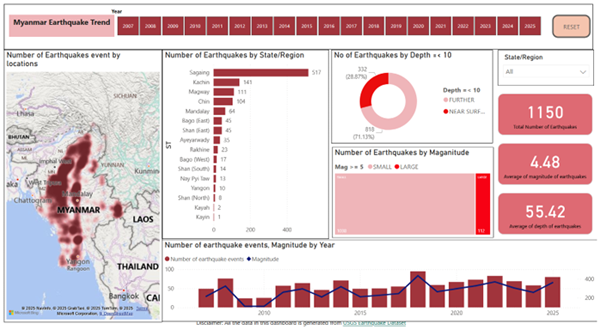
Earthquake response and data were key parts of the recently completed Power BI Training from MIMU. Here is an example of a great final project from training participants. Data analysis tools such as Power BI and Tableau play a key role in information management processes during disasters.

Please keep an eye on this newsletter for announcements about the next training.

Meanwhile, you may also learn Power BI through our online resources.


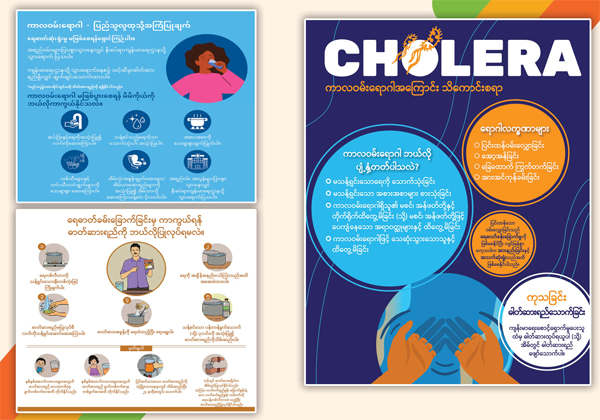
Information, Education, and Communication (IEC) materials for monsoon season, including posters on cholera and influenza, are now available on the MIMU website.

📝 Explore on MIMU’s Emergency Resources page.

The Myanmar Environmental Country Profile (ECP) offers practical guidance for Shelter/NFI/CCCM Cluster partners in Myanmar, focusing on integrating environmental sustainability into shelter and settlement interventions.

📝 Read more in the guidance note.

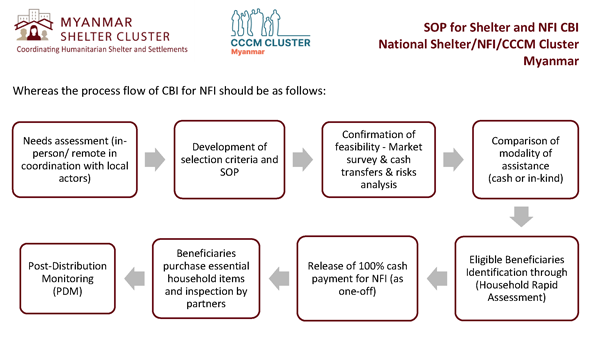
The Shelter/NFI/CCCM National Cluster has developed Standard Operating Procedures (SOPs) with the aim to support partners as a reference for the implementation of cash for Shelter and NFI (Non-food items) assistance. These SOPs outline the systems, responsibilities, and critical actions for implementing cash-based Interventions of cluster partners in Myanmar. These SOPs deal with the feasibility, set-up, implementation, and monitoring phases of the project cycle for cash disbursement for sectoral cash (Cash for Shelter and Cash for NFIs). The SOPs guide both cash transfers delivered by cluster partners and those by financial service providers on the basis of partners’ assessment. They do not cover any pre-implementation activities (e.g., assessment, response analysis, etc.).

📝 Read more in the document.
🌐 Explore the Shelter/NFI/CCCM Cluster web page on MIMU.

Seven weeks on, the impacts of the 28 March earthquakes in central Myanmar continue to drive significant humanitarian needs, both for immediate relief and early recovery.
See the breakdown of needs, responses and activities from the latest Situation Report #6 from UNOCHA.

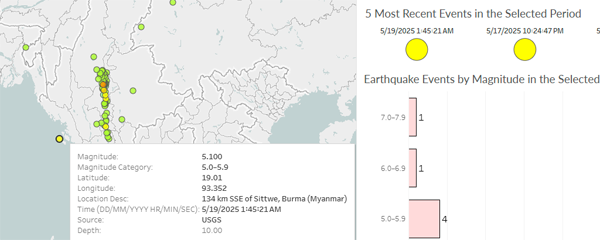
Following two recent magnitude 5+ earthquakes, use MIMU’s interactive earthquake map to monitor and explore the latest and historical events since April 2007.

Organisations have been publishing human-interest stories from the ground to highlight the devastating impact of the earthquake on communities and families, and how their efforts have been helping them recover.

Here are some stories recently published.

“We had nothing but each other” (UNICEF)
It follows Zin Mar, her disabled son Min Khant, and her elderly father in Mandalay. A one-off emergency cash transfer of 360 000 kyat (about 85 USD) gives families both flexibility and dignity to decide what they need most. More than 25 000 people have been reached so far, and registration continues in newly accessed villages.

“The quake stopped, but he hasn’t slept since” (UNICEF)
Eight-year-old Mg Pyae escaped a collapsing house but now relives the quake every night. The story explores the invisible wounds many children carry and highlights how UNICEF is rolling out psychosocial first aid, child-friendly spaces, and recreational kits so boys and girls can draw, play, and to help restore moments of joy and normalcy, ultimately for restoring hope.

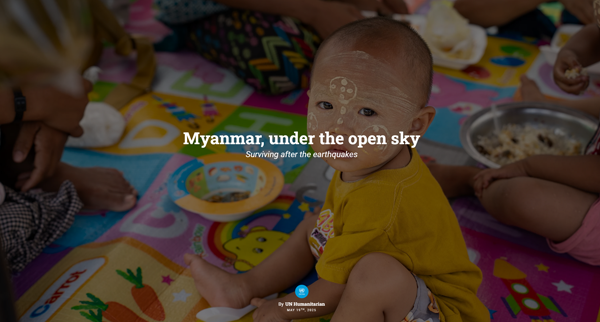
“Myanmar, under the open sky” (UNOCHA)
This photo-essay gathers voices from Mandalay and Sagaing: Daw Htar Ei (73) who lost everything she owned, including her fruit stall, twelve-year-old Nay Nay who longs to return to school, and vendors like Ma Kaythi surviving in flimsy roadside tents.

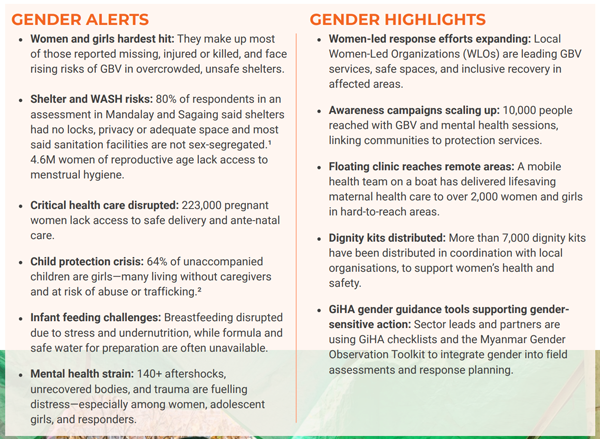
Gender in Humanitarian Action Working Group (GiHA WG) recently published the Myanmar Earthquake Gender Situation Report No. 1, based on analysis and data voluntarily shared by GiHA members and their partners, highlighting emerging gendered risks, needs and gaps to inform humanitarian action.

📝 Read more in the report.

The Shelter/NFI & CCCM National Cluster has released its Myanmar Earthquake Response Strategy (May 2025). The plan sets out a two-phase approach to assist 753,000 people. Needs have surged from 1 million to 5.2 million people requiring shelter assistance after the 28 March earthquake, which damaged or destroyed more than 40,000 homes and left many families sleeping in the open.

Phase 1 (now under way) focuses on immediate life-saving relief such as the provision of non-food items (NFI) and emergency shelter over the first three months; Phase 2 starts immediately after Phase 1 and shifts to life-sustaining response such as shelter repairs and dignified transitional solutions before the monsoon. The strategy stresses DRR, gender and protection mainstreaming, and calls for urgent funding and enhanced coordination to scale up the response.

📝 Read the strategy for details.

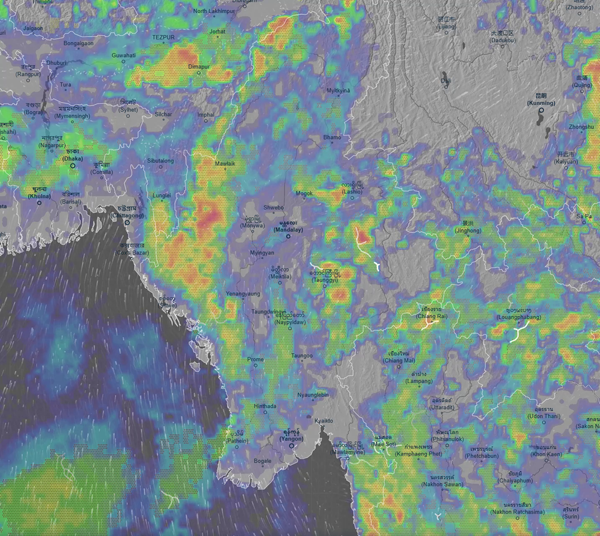
The monsoon has reached Myanmar this week, and a weather advisory warns of scattered to widespread rainfall, including isolated heavy downpours, across several regions and states between 14 – 20 May.

These rains can have adverse effects on earthquake recovery and response efforts, and they pose added challenges for affected communities still sleeping in the open, as noted above.